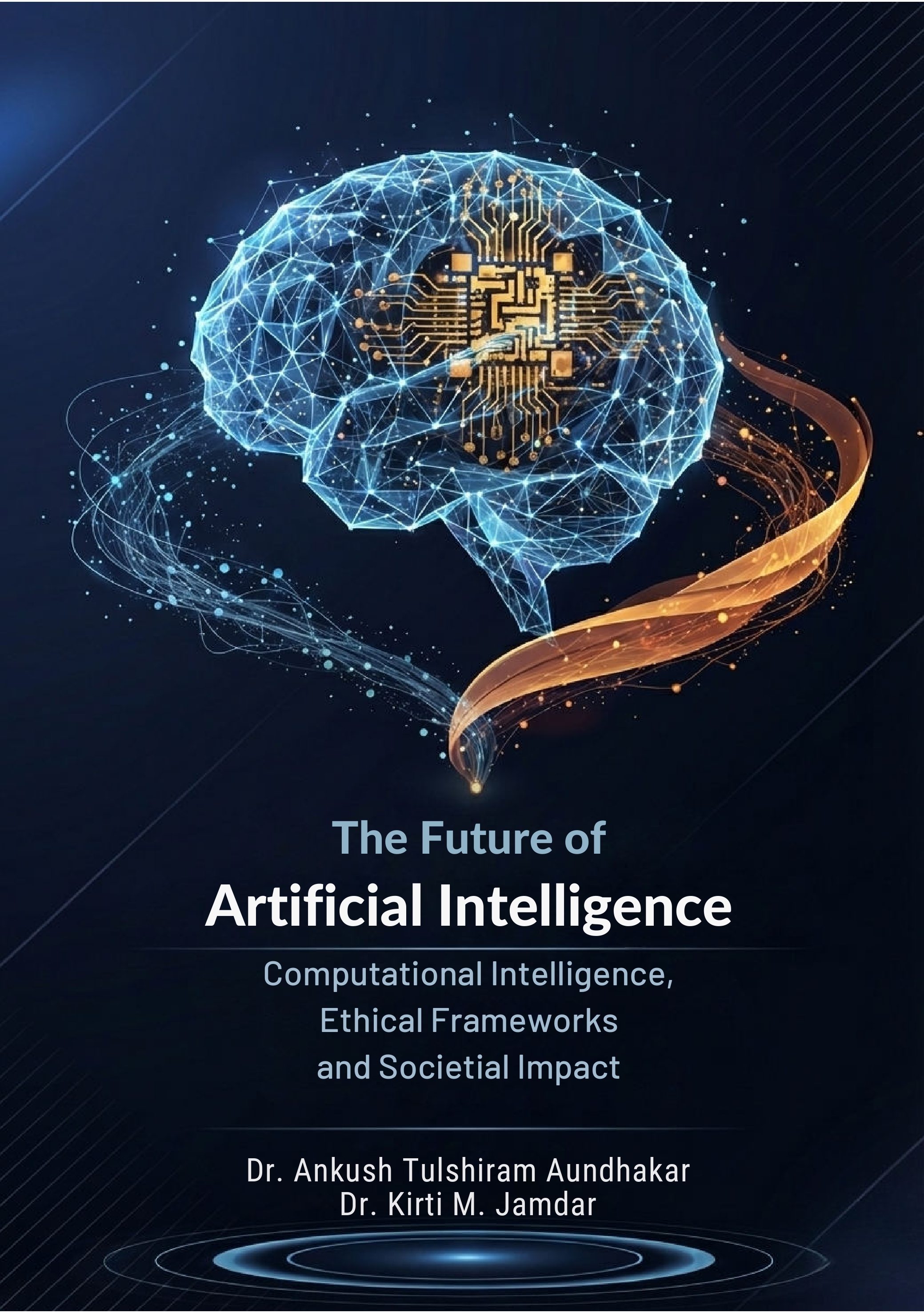
The Future of Artificial Intelligence: Computational Intelligence, Ethical Frameworks, and Societal Impact
The Future of Artificial Intelligence: Computational Intelligence, Ethical Frameworks, and Societal Impact
Available Formats:
₹1,000.00
Physical book - shipping included
Description
Artificial intelligence has emerged as one of the most influential forces shaping contemporary society. What was once a specialized area of computer science has evolved into a multidisciplinary domain that intersects with economics, governance, ethics, culture, and everyday human experience. Intelligent systems now influence how decisions are made, how knowledge is produced, how organizations function, and how individuals interact with technology. This book was conceived in response to the growing need for a comprehensive, reflective, and human-centered understanding of artificial intelligence—one that goes beyond technical performance to address its broader social, ethical, and institutional implications. The motivation behind this work lies in the recognition that artificial intelligence cannot be understood solely through algorithms and data structures. While computational efficiency and model accuracy remain important, they represent only one dimension of a much larger transformation. AI systems operate within social contexts, reflect human values, and shape real-world outcomes. As such, meaningful engagement with AI requires an integrated perspective that combines computational foundations with ethical reasoning, governance frameworks, and societal awareness. This book seeks to bridge that gap by presenting artificial intelligence as a socio-technical phenomenon rather than a purely technological artifact.
The chapters in this book are designed to guide readers through the conceptual foundations, methodological approaches, and emerging challenges of artificial intelligence in a structured and accessible manner. Early chapters focus on computational intelligence, machine learning paradigms, and data-driven decision-making, establishing a solid theoretical and technical base. Subsequent chapters explore explainability, ethical frameworks, policy, global governance, and societal transformation, emphasizing the responsibilities that accompany technological power. The final sections reimagine the human–AI relationship and future directions, encouraging readers to reflect on long-term implications and shared futures. A central theme throughout this book is the idea that artificial intelligence should serve human and societal goals rather than redefine them unilaterally. As AI systems become more autonomous and influential, questions of accountability, transparency, fairness, and trust become increasingly urgent. This book does not present AI as an inevitable force beyond human control, nor does it adopt a purely optimistic or pessimistic stance. Instead, it adopts a balanced and critical perspective, recognizing both the transformative potential of AI and the risks associated with its misuse or unreflective deployment.
Another guiding principle of this work is inclusivity—both in terms of perspectives and audiences. The book is intended for researchers, students, policymakers, professionals, and readers from diverse disciplinary backgrounds who seek a deeper understanding of artificial intelligence and its implications. Technical concepts are presented with conceptual clarity, while ethical and societal discussions are grounded in practical relevance. Wherever possible, the content emphasizes interpretability, contextual understanding, and real-world applicability rather than abstract speculation.
This book also reflects the belief that ethical reflection and responsible governance are not obstacles to innovation but essential components of sustainable technological progress. Ethical foresight, participatory governance, and interdisciplinary collaboration are recurring themes, highlighting the importance of proactive engagement rather than reactive regulation. By embedding ethical reasoning within discussions of algorithms, data, and decision-making, the book encourages readers to view responsibility as an integral part of AI design and deployment.
The rapid evolution of artificial intelligence means that no single volume can claim to be exhaustive or final. Instead, this book aims to contribute to an ongoing conversation about how intelligent systems should be developed, governed, and integrated into society. It invites readers to question assumptions, engage critically with emerging technologies, and consider their own roles in shaping AI-driven futures. The perspectives offered here are intended to stimulate reflection rather than prescribe fixed answers.
Ultimately, this book is grounded in the conviction that the future of artificial intelligence is a human choice. The systems we build, the policies we adopt, and the values we prioritize will determine whether AI amplifies inequality or supports inclusion, erodes trust or strengthens institutions, replaces human agency or enhances it. By bringing together computational foundations, ethical frameworks, and societal analysis, this book seeks to support informed, responsible, and forward-looking engagement with artificial intelligence. It is our hope that this work will serve as a meaningful resource for understanding artificial intelligence not only as a technological achievement, but as a defining element of contemporary and future human experience.
The chapters in this book are designed to guide readers through the conceptual foundations, methodological approaches, and emerging challenges of artificial intelligence in a structured and accessible manner. Early chapters focus on computational intelligence, machine learning paradigms, and data-driven decision-making, establishing a solid theoretical and technical base. Subsequent chapters explore explainability, ethical frameworks, policy, global governance, and societal transformation, emphasizing the responsibilities that accompany technological power. The final sections reimagine the human–AI relationship and future directions, encouraging readers to reflect on long-term implications and shared futures. A central theme throughout this book is the idea that artificial intelligence should serve human and societal goals rather than redefine them unilaterally. As AI systems become more autonomous and influential, questions of accountability, transparency, fairness, and trust become increasingly urgent. This book does not present AI as an inevitable force beyond human control, nor does it adopt a purely optimistic or pessimistic stance. Instead, it adopts a balanced and critical perspective, recognizing both the transformative potential of AI and the risks associated with its misuse or unreflective deployment.
Another guiding principle of this work is inclusivity—both in terms of perspectives and audiences. The book is intended for researchers, students, policymakers, professionals, and readers from diverse disciplinary backgrounds who seek a deeper understanding of artificial intelligence and its implications. Technical concepts are presented with conceptual clarity, while ethical and societal discussions are grounded in practical relevance. Wherever possible, the content emphasizes interpretability, contextual understanding, and real-world applicability rather than abstract speculation.
This book also reflects the belief that ethical reflection and responsible governance are not obstacles to innovation but essential components of sustainable technological progress. Ethical foresight, participatory governance, and interdisciplinary collaboration are recurring themes, highlighting the importance of proactive engagement rather than reactive regulation. By embedding ethical reasoning within discussions of algorithms, data, and decision-making, the book encourages readers to view responsibility as an integral part of AI design and deployment.
The rapid evolution of artificial intelligence means that no single volume can claim to be exhaustive or final. Instead, this book aims to contribute to an ongoing conversation about how intelligent systems should be developed, governed, and integrated into society. It invites readers to question assumptions, engage critically with emerging technologies, and consider their own roles in shaping AI-driven futures. The perspectives offered here are intended to stimulate reflection rather than prescribe fixed answers.
Ultimately, this book is grounded in the conviction that the future of artificial intelligence is a human choice. The systems we build, the policies we adopt, and the values we prioritize will determine whether AI amplifies inequality or supports inclusion, erodes trust or strengthens institutions, replaces human agency or enhances it. By bringing together computational foundations, ethical frameworks, and societal analysis, this book seeks to support informed, responsible, and forward-looking engagement with artificial intelligence. It is our hope that this work will serve as a meaningful resource for understanding artificial intelligence not only as a technological achievement, but as a defining element of contemporary and future human experience.
About the Authors