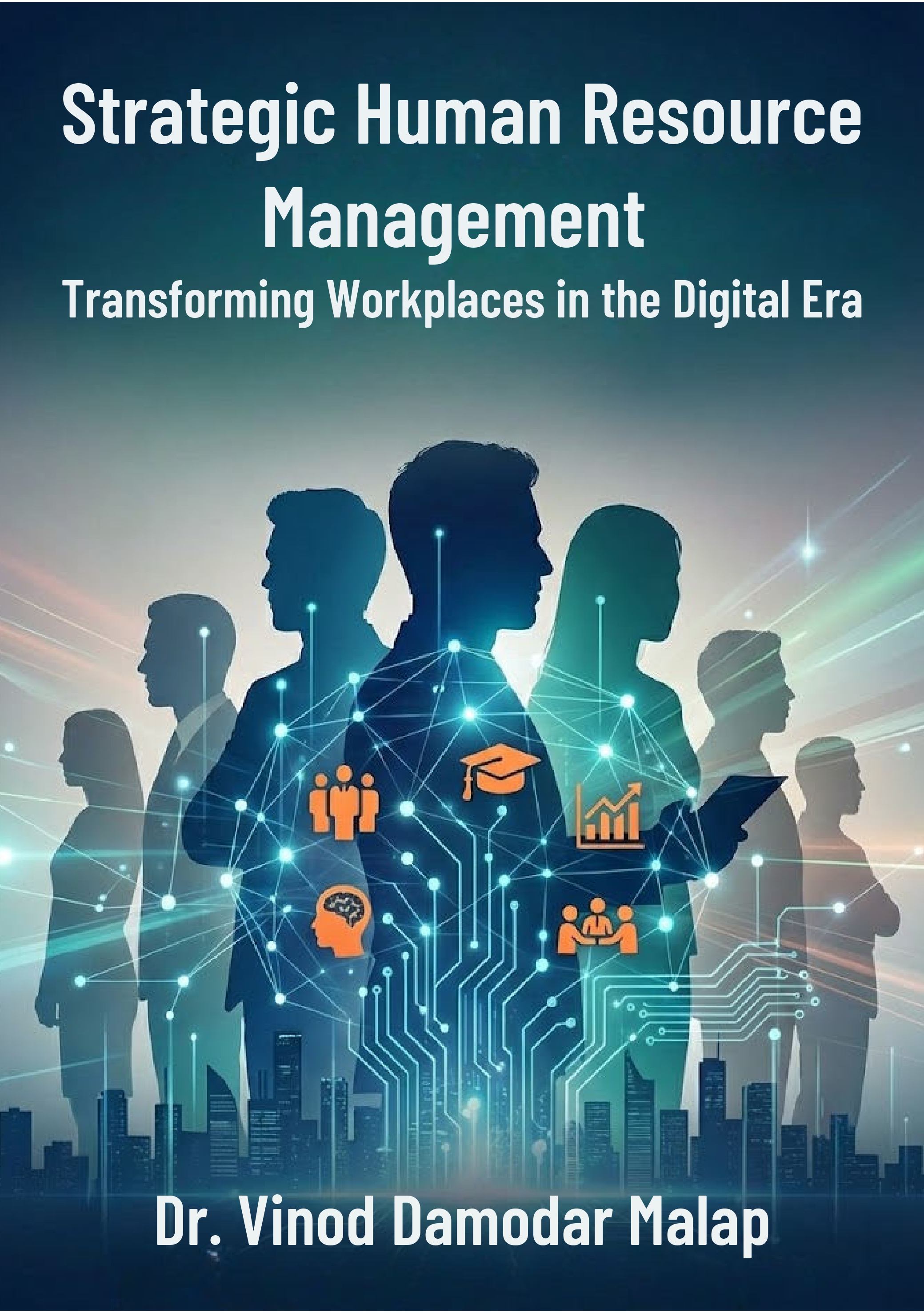
Strategic Human Resource Management: Transforming Workplaces in the Digital Era
Strategic Human Resource Management: Transforming Workplaces in the Digital Era
Available Formats:
₹1,000.00
Physical book - shipping included
Description
The world of work is changing at a pace that few could have imagined just a decade ago. Advances in digital technology, shifting economic structures, evolving employee expectations, and global connectivity have collectively reshaped how organizations operate and how individuals experience work. In this rapidly transforming environment, Human Resource Management has emerged as a critical force—not merely as a support function, but as a strategic partner influencing organizational resilience, innovation, and long-term success.
This book was written in response to that transformation. It seeks to explore how HR is evolving in the digital era and how people strategy has become central to navigating technological change. Rather than viewing digitalization as a purely technical shift, this work emphasizes the human dimension of transformation—how employees adapt, how leaders guide change, and how organizations balance efficiency with empathy.
The primary aim of this book is to bridge theory and practice. While grounded in established research and contemporary literature, it also reflects real organizational challenges faced by HR professionals, managers, and leaders across industries. Concepts such as data-driven HR, digital performance management, ethical AI, remote work, employee well-being, and leadership empathy are examined not as isolated trends, but as interconnected elements shaping the future of work.
This book is intended for a wide audience. Students of human resource management and business will find it useful for building conceptual clarity and understanding modern HR practices. Academicians and researchers may use it as a reference point for discussions on digital HR and strategic HRM. Practitioners—HR professionals, managers, and organizational leaders—may find value in its practical insights, reflective discussions, and forward-looking perspectives on workforce transformation.
A defining theme throughout this book is balance. As organizations embrace automation, analytics, and artificial intelligence, the need to preserve trust, fairness, inclusion, and human connection becomes increasingly important. Digital tools can enhance decision-making, but they cannot replace judgment, empathy, or ethical responsibility. This book consistently argues that sustainable digital success depends on aligning technology with human values rather than prioritizing efficiency at the expense of people.
Each chapter is designed to build progressively—from understanding the changing nature of work to examining digital HR practices, ethical challenges, leadership responsibilities, and future workforce trends. Together, they offer a comprehensive view of how HR can function as a strategic enabler in a digitally driven ecosystem.
Ultimately, this book is an invitation to rethink HR’s role in a changing world. It encourages readers to move beyond transactional perspectives and to recognize HR as a key architect of organizational capability, culture, and readiness for the future. If this work prompts reflection, informed dialogue, or more human-centered approaches to digital transformation, it will have fulfilled its purpose.
This book was written in response to that transformation. It seeks to explore how HR is evolving in the digital era and how people strategy has become central to navigating technological change. Rather than viewing digitalization as a purely technical shift, this work emphasizes the human dimension of transformation—how employees adapt, how leaders guide change, and how organizations balance efficiency with empathy.
The primary aim of this book is to bridge theory and practice. While grounded in established research and contemporary literature, it also reflects real organizational challenges faced by HR professionals, managers, and leaders across industries. Concepts such as data-driven HR, digital performance management, ethical AI, remote work, employee well-being, and leadership empathy are examined not as isolated trends, but as interconnected elements shaping the future of work.
This book is intended for a wide audience. Students of human resource management and business will find it useful for building conceptual clarity and understanding modern HR practices. Academicians and researchers may use it as a reference point for discussions on digital HR and strategic HRM. Practitioners—HR professionals, managers, and organizational leaders—may find value in its practical insights, reflective discussions, and forward-looking perspectives on workforce transformation.
A defining theme throughout this book is balance. As organizations embrace automation, analytics, and artificial intelligence, the need to preserve trust, fairness, inclusion, and human connection becomes increasingly important. Digital tools can enhance decision-making, but they cannot replace judgment, empathy, or ethical responsibility. This book consistently argues that sustainable digital success depends on aligning technology with human values rather than prioritizing efficiency at the expense of people.
Each chapter is designed to build progressively—from understanding the changing nature of work to examining digital HR practices, ethical challenges, leadership responsibilities, and future workforce trends. Together, they offer a comprehensive view of how HR can function as a strategic enabler in a digitally driven ecosystem.
Ultimately, this book is an invitation to rethink HR’s role in a changing world. It encourages readers to move beyond transactional perspectives and to recognize HR as a key architect of organizational capability, culture, and readiness for the future. If this work prompts reflection, informed dialogue, or more human-centered approaches to digital transformation, it will have fulfilled its purpose.
About the Author